Rosario Islands: The Archipelago Off Cartagena, Explained
The Rosario Islands sit roughly 20 kilometres (12 miles) off Cartagena, a scatter of low coral islets protected as one of Colombia's national natural parks, and reaching them means a speedboat of about 45 minutes to an hour from the city docks. This page explains which islands day boats actually visit, what the trip costs beyond the ticket, and where the common mistakes happen, from the cash-only dock tax to lunch prices nobody agreed on. When you are ready to compare specific boats, the Rosario Islands excursions we track from Cartagena sit on the homepage with prices and review counts.
Quick answer
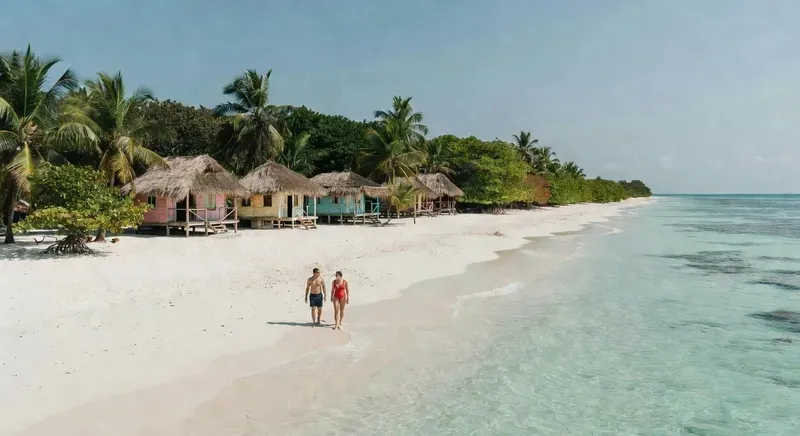
The Islas del Rosario are a coral archipelago about 20 kilometres from Cartagena, inside the Corales del Rosario y San Bernardo national natural park, founded in 1988. Every visit starts with a boat, most of them leaving Muelle de la Bodeguita between about 7:30 and 9:00 in the morning, and a dock and park charge of roughly 20,000 to 25,000 COP (about US$5 to US$6) is collected separately in cash. Boats leave the islands by 3:00 to 4:00 PM and must be back in Cartagena before 5 PM, so a day trip runs on a fixed clock.
Key takeaways
- The most-booked option is the five-island speedboat day with lunch, around $70 with 5,500+ reviews
- Boat ride: 45 minutes to an hour each way by speedboat; catamarans take about 2 hours
- Bring cash for the dock tax and beach spending, there are no ATMs on the islands
- Playa Blanca sits on Isla Barú, a peninsula reachable by road, and is not one of the Rosario Islands proper; the combined reef-plus-Playa-Blanca trip covers both in one day
- Dry season from December to April is the reliable window, though trade winds make afternoon returns choppier in exactly those months
Rosario Islands Tours from Cartagena Worth Comparing
These are the Rosario Islands day trips with the strongest review records among the excursions we track. All three leave Cartagena in the morning and return before 5 PM; the differences are the number of stops, the beach clubs used, and whether snorkeling or the Oceanario is folded in.
from $70
Cartagena: 5 Must-See Rosario Islands Highlights with Lunch
The most-booked Cartagena Colombia excursion: visit five distinct Rosario Islands in a single day, with stops at Bocachica Fort and Pablo Escobar's former estate, an optional snorkeling session…
- 5 Rosario Islands in one day
- Bocachica Fort + Escobar Mansion
- 3 beach club passes included
- Eco, VIP or Party ticket options
 from $72
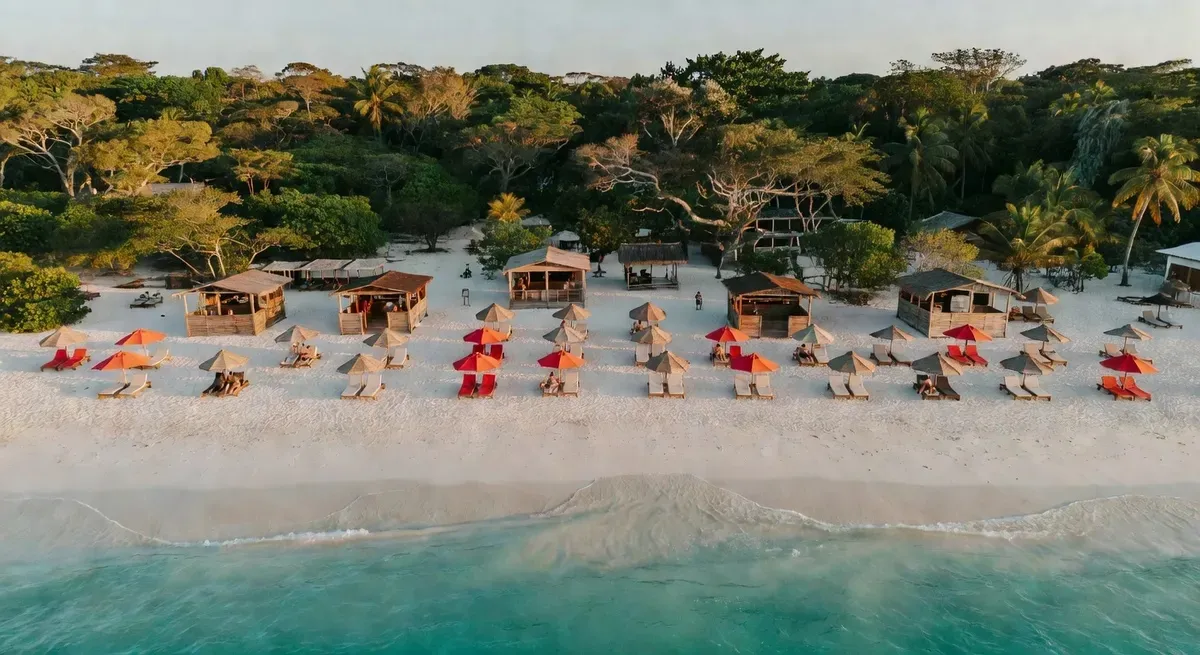
Cartagena: Rosario Islands & Playa Blanca with Snorkeling or Aquarium
Hop aboard a speedboat for a full day at the Rosario Islands and Playa Blanca de Barú — snorkel a vibrant coral reef teeming with 40+ species, or…
- Snorkel 40+ coral species
- Optional Oceanarium & dolphin show
- Lunch at Playa Blanca beach club
- Hammocks & sun loungers included
 from $70
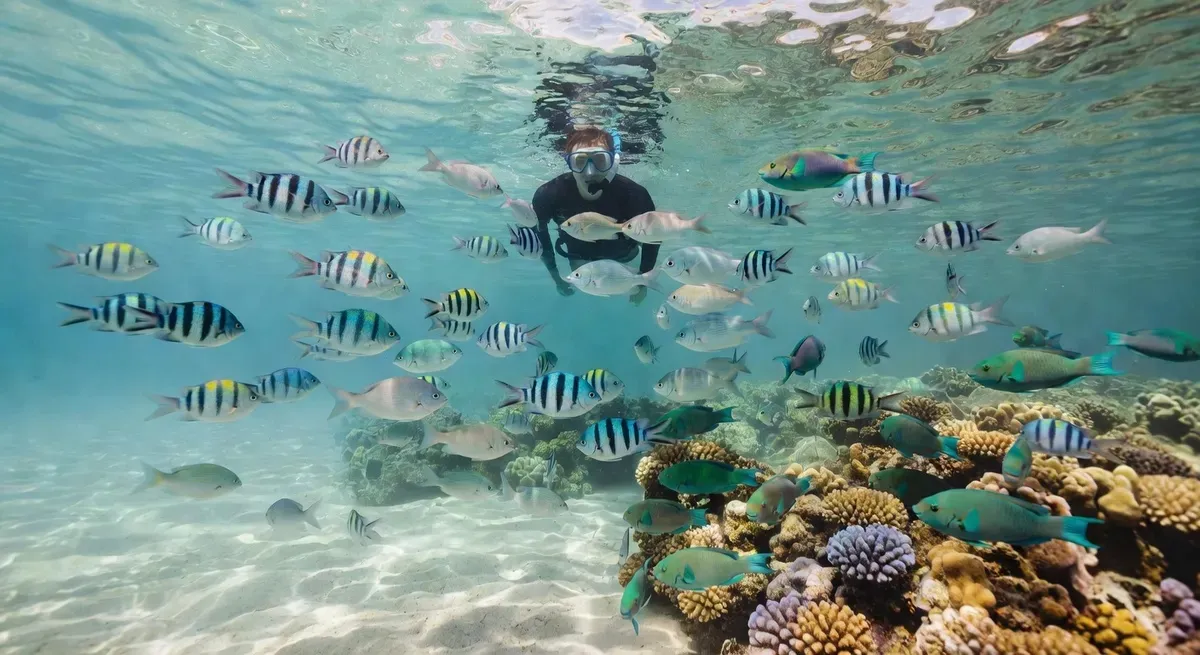
Cartagena: 6-Stop Rosario Islands Snorkel, Aquarium & Lunch
Six distinct island stops in one full-day speedboat excursion from Cartagena: Fort Bocachica, Pablo Escobar's estate, a marine-lagoon snorkel session, Isla Marina, Isla Grande for lunch, and an…
- 6 islands + Bocachica Fort
- Snorkel + optional Oceanarium
- 3 beach club passes included
- Lunch: fish, chicken or veg
What the Rosario Islands Are
A Coral Archipelago Inside a National Park
The Islas del Rosario, sometimes written Corales Islas del Rosario, are a chain of small coral islands roughly 20 kilometres (12 miles) southwest of Cartagena in the Bolívar department. The whole group sits inside the Parque Nacional Natural Corales del Rosario y San Bernardo, one of Colombia's 46 national natural parks, founded in 1988 to protect the most important coral reefs on the country's Caribbean coast along with the seagrass beds and mangroves around them. The park is enormous on paper, stretching from the reefs west of Isla Barú down past the San Bernardo Islands further south, which is why boats collect a park charge before you ever see a beach.
How Many Islands Are There? Sources Disagree
Even the basic count is contested. One frequently cited description puts the chain at 27 islands, strung out like the rosary beads the name suggests, while another counts 28 islands and reefs. The difference comes down to what you call an island versus a sandbar with a palm on it, and nothing about your day changes either way: organized boats visit the same handful of developed spots regardless of how the mapmakers count.
The Escobar Chapter
Isla Grande holds the half-demolished remains of Pablo Escobar's Caribbean compound, a mansion with courtyards, a pool and a helicopter pad, now overtaken by vegetation. Boat tours point it out from the water, and one of the area's stranger snorkel stops is a sunken plane nearby, a former drug-running aircraft the Colombian government seized and intentionally sank. The 4 or 5 islands trip snorkels over that plane.
Which Islands Day-Trippers Actually Visit
The Short List
Of the whole archipelago, organized day trips concentrate on a handful of places. Isla Grande is the largest and busiest, home to most of the beach clubs and lodges, the reef snorkel sites and the Escobar ruins. Isla Rosario and the islets near it hold the Oceanario aquarium.
Cholón, a sheltered anchorage off Isla Barú, is the party stop where boats raft together with music and floating bars. Multi-stop tours often pass Isla Tierra Bomba on the way out and some pause at the colonial Bocachica fortifications on that island. Beyond these, most of the chain is private, uninhabited or reserved, which is why two different five-island tours can sound identical and still use different beaches.
| Stop | What It Is | Who Goes |
|---|---|---|
| Isla Grande | Largest island: beach clubs, lodges, reef snorkeling, Escobar ruins | Almost every tour and day pass |
| Isla Rosario area | Site of the Oceanario open-sea aquarium | Tours with an aquarium option |
| Cholón (off Barú) | Party anchorage, boats and floating bars | Party-ticket tours and private boats |
| Playa Blanca (Barú) | Long white beach on the Barú peninsula, outside the archipelago proper | Budget tours and land day-trippers |
| Tierra Bomba / Bocachica | Island in Cartagena's bay with Spanish forts | Some multi-stop tours en route |
Why the Island Count on a Tour Name Means Little
A "5 islands" or "6 stops" title usually mixes real Rosario islands with Barú, Cholón and Tierra Bomba, none of which are Rosario islands in the strict sense. Judge a tour by its named stops and time at each, not the number in the title. The 6-stop itinerary, for example, spends its beach time on Isla Grande and its snorkel time in a marine lagoon, with Bocachica viewed from the boat.
Getting There: Boats from Muelle de la Bodeguita
The Only Way In Is by Boat
There are no flights, no ferry schedule in the European sense, and no bridge: you cannot drive to the Rosario Islands. Nearly all organized tours and hotel transfers leave from the Muelle de la Bodeguita docks just outside Cartagena's Walled City, while some private charters use the marinas in Bocagrande or Manga. Boats leave early: check-in commonly opens around 7:30 AM and most departures happen between 8:00 and 9:00 AM.
Plan to arrive with time to spare, since dock check-in on a busy morning is slow, and one common complaint about the cheapest tours is 90 minutes of standing around before boarding.
The Dock Tax and Park Fee, Paid in Cash
On top of your tour ticket, visitors pay a dock and national park charge, usually collected separately at the docks. Competitor guides quote it differently: one puts the park entry tax at around 25,000 COP (about US$6), another paid a 20,000 COP (about US$5) port fee per person, cash only, at the dock gate. Treat it as 20,000 to 25,000 COP in cash per person as of August 2026, confirm whether your tour includes it, and carry small notes because there is no card reader at the gate.
The Return Trip Is Rougher, and Earlier Than You Think
Seas are usually calm on the morning crossing. In the afternoon the wind picks up, so boats leave the islands between 3:00 and 4:00 PM and have to be back in Cartagena before 5 PM; during the windy stretch from late December to April many tours pull out even earlier, around 2:30 PM. Expect a bouncy, wet ride home on a speedboat, enough that one visitor compared it to a rollercoaster.
Catamarans trade speed for stability, taking about 2 hours each way but staying far more comfortable, which matters for families and anyone prone to seasickness.
Playa Blanca and Isla Barú: Related, but Not Rosario
The Geography, Said Plainly
Playa Blanca, the long white-sand beach that headlines many cheap island tours, sits on Isla Barú, and Barú is effectively a peninsula connected to the mainland by road, not one of the Rosario Islands. Parts of Barú fall inside the same national park, and the far end of Barú hosts the area's few resort-style hotels, so the confusion is understandable, but if your goal is the coral archipelago itself, a tour that spends its beach time at Playa Blanca is giving you Barú, not the Rosarios.
What Playa Blanca Is Actually Like
The beach is genuinely beautiful and genuinely overrun. Reviewers consistently describe crowds, loud music and persistent vendors, and one Cartagena-based guide calls it a victim of mass tourism, preferring Isla Grande for a quieter day. Because Barú is road-connected, you can skip the boat entirely: a taxi from Cartagena runs about 120,000 to 150,000 COP (roughly US$29 to US$36), you arrive on your own schedule, and walking right along the sand to Playa Tranquila gets you away from the densest stretch.
Returning by tourist boat around 3 PM costs up to about 50,000 COP if you negotiate it on the beach.
When Playa Blanca Makes Sense
If you want maximum beach hours for minimum money and do not mind the scene, Playa Blanca delivers. The Rosario Islands and Playa Blanca combination trip is the tidy middle path: reef snorkeling in the archipelago first, then the Playa Blanca beach club stretch with lunch, which is also the version we reviewed in detail in our Playa Blanca tour write-up.
Four Ways to Visit, Compared
Shared Tour, Day Pass, Private Boat or Overnight
Every Rosario Islands visit falls into one of four formats, and local guides who have done all four agree there is no wrong answer, only budget and temperament. As of August 2026, shared full-day trips start around US$40 with the popular ones at US$60 to US$120, and a private boat starts near US$350 for the day.
| Format | Rough Cost (August 2026) | Best For | Catch |
|---|---|---|---|
| Shared boat tour | US$40 to US$120 per person | Seeing several islands in one day | Fixed clock, shared beaches, quality varies wildly |
| Beach club day pass | Mid-range, includes boat, lounger and lunch | A full day on one good beach | Arrive 9 to 10 AM, leave around 3 PM, one location only |
| Private boat | From about US$350 for the boat | Groups of 5+, full flexibility | Steep for couples; the day depends on your crew |
| Overnight stay | Lodge and resort prices, not cheap | Sunsets and empty beaches after day boats leave | Eats nearly two full days of your Cartagena time |
The Honest Per-Person Math
For groups of five or more, a private boat often works out close to the per-person price of good shared tickets, which is why Cartagena locals push friends toward charters. For a couple, the shared multi-stop tours are the value play, and the five-island trip is the most-reviewed of them, with Ecological, VIP and Party ticket tiers that change which beaches you sit on. Our full review of that five-island day walks through what each tier actually buys.
Day-Pass Beach Clubs vs Island-Hopping Tours
The Trade-Off in One Sentence
An island-hopping tour gives you more scenery and more stops but keeps you on a schedule; a day pass gives you one beach, one lounger and no clock beyond the return boat. If your picture of the day is reading in the shade with a cold drink, book a club. If it is seeing the archipelago, book a boat.
The Clubs That Come Up Again and Again
Among day-pass properties, three names dominate firsthand accounts. IslaBela draws praise as a relaxed, family-friendly bay with assigned shaded loungers, a welcome juice, included lunch, free kayaks and an optional reef trip; one visitor called it the highlight of two weeks in Colombia. Isla del Encanto is the amenities pick, with a pool, spa, calm swimming water and paddle boards, well suited to families.
Bora Bora Beach Club is the party option, with a DJ, beach beds and celebrity sightings, but read the fine print: the standard ticket does not include the VIP section you see in its photos. Day passes typically land you on the island around 9 to 10 AM and pull you out near 3 PM.
Where Tours Fit
Most multi-stop tours use beach clubs too, just in shorter blocks. The five-island and 6-stop itineraries both include beach club access on more than one island plus a cooked Caribbean lunch, so they function as a sampler of the day-pass experience stitched together with boat time.
Snorkeling in the Rosario Islands, Honestly
Decent, Not the Caribbean's Best
The honest read from repeat visitors: the snorkeling is okay, not spectacular. One reviewer who has done the trip multiple times describes the Isla Grande reef snorkel as "okay, not the best, but still a cool experience," and on the cheapest tours there can be more people in the water than fish. The park protects real coral, seagrass and mangrove ecosystems, and a good guide who free-dives to point out fish and crabs lifts the experience considerably, but if you are comparing against Bonaire or the Mexican cenotes, recalibrate.
Water clarity is best in the morning and in the December to April dry season.
The Spots Worth Asking For
Three snorkel stops recur in firsthand accounts: the reef off Isla Grande, the calm shallow area known as La Piscinita, and the sunken plane near the Escobar mansion, which you can float over and dive down to. Divers have it better: the area counts 28 known dive sites, and the archipelago is one of Colombia's recognized dive regions.
What Snorkeling Costs Extra
Snorkeling is an upsell almost everywhere. At beach clubs the guided reef trip runs about 50,000 COP (about US$12) per person, payable by card at the better properties, and cheap boat tours charge separately for gear. Tours that build it in, like the snorkel-or-aquarium trip with its 40+ coral species reef stop, spare you the on-the-spot negotiation.
The Oceanario Aquarium
On the islets by Isla Rosario sits the Oceanario, an open-sea aquarium with enclosures set into the sea itself, running dolphin and shark exhibits. It is almost always an optional add-on with a separate entry fee, and if you skip it on a boat that stops there, you wait while ticket holders visit, so pick an itinerary that matches your intention. Opinions split sharply too: some travelers rate the dolphin show a highlight, while one reviewer found the animals in captivity a sad sight.
The snorkeling-or-aquarium tour makes it a clean either-or choice, and our 6-stop tour review covers how the Oceanario slots into that longer day.
Best Months for a Rosario Islands Trip
December to April: Dry, Bright, and Windy
The dry season from December to April is the dependable window: the least rain, the most reliably clear water, and the postcard light the islands are photographed in. The caveat is wind. The trade-wind stretch from late December to April makes the afternoon crossing back to Cartagena noticeably choppier, and tours respond by leaving the islands earlier, around 2:30 PM instead of 3:30 or 4:00.
You trade a slightly shorter beach day for better weather on it.
The Rest of the Year, and the Days to Avoid
May through November brings more rain and flatter seas between showers; mornings often stay usable and crowds thin out. What matters more than month is the calendar: local guides are unanimous that high season, weekends and Colombian public holidays are the dates to avoid, when docks jam and the cheapest tours oversell. A dry-season Tuesday beats a rainy-season Saturday.
Book online a few days ahead, since resort day passes genuinely sell out.
What to Bring for a Day on the Islands
The Short Packing List
The islands run on cash and sunshine, and there are no ATMs out there. Everything below fits in one small dry bag.
- Cash in small notes: the 20,000 to 25,000 COP dock tax, beach vendors and boat-side purchases are cash only, even where clubs take cards for extras
- Reef-safe sunscreen and a hat: the boat ride and the beaches are shadeless unless you paid for shade
- Water shoes: these are coral islands and several beaches are rocky underfoot
- A dry bag or water-resistant backpack for phone and documents on wet boat landings
- Any medication you need for the day, plus seasickness tablets for the afternoon return
- Snorkel mask if you own one, so gear rental cannot become an upsell
- Bug spray only if you are staying overnight
What to Leave Behind
Leave jewelry and anything you cannot afford to soak at your hotel: on shared boats your bag sits in a communal pile, and at Playa Blanca there is nowhere secure to store valuables while you swim.
Tourist Traps and How to Sidestep Them
The Cheap Dock Tour
Street vendors around the Walled City sell Rosario trips for less than US$10, and the pattern behind them is well documented: long waits at the dock, sometimes 90 minutes, an overcrowded speedboat with bench seats and no shade, then a day of upsells where the chair, the umbrella, the snorkel gear and the lunch upgrade each cost extra. Nearly every bad Rosario review traces back to this format. The fix is boring and effective: book online through a platform where the operator has hundreds of reviews you can read first, like the excursions compared on our homepage.
The Unagreed Lunch Price
The second classic: sitting down at a beach restaurant or accepting food from a passing vendor without fixing the price first, then meeting a bill designed for tourists. A TripAdvisor visitor to Isla Grande reported restaurant meals around 200,000 COP (roughly US$48), and there are no free samples on these beaches. Agree on the exact price, in writing on a phone if needed, before anything is cooked, opened or handed over.
Tours that include lunch, like the five-island day, remove the ambush entirely.
Smaller Frictions Worth Knowing
Check whether your park and dock tax is included or collected separately, confirm what "snorkeling included" means, gear or guided trip, and treat "private beach access" claims with skepticism: several tour tiers sell the same clubs, just different rows of chairs.
A Realistic Rosario Islands Day, Hour by Hour
How the Day Actually Runs
Timings below reflect the standard shared-tour and day-pass rhythm reported by visitors across the excursions we compare; individual boats shift by half an hour either way.
| Time | What Happens |
|---|---|
| 7:30 AM | Check-in at Muelle de la Bodeguita; pay the cash dock and park charge if not included |
| 8:00 to 9:00 AM | Departure; 45 minutes to an hour by speedboat, about 2 hours by catamaran |
| 9:30 to 11:30 AM | First stops: reef or lagoon snorkel, Bocachica or Escobar mansion viewpoints, or straight to your beach club |
| 12:00 to 1:30 PM | Caribbean lunch, typically fried fish or chicken with coconut rice and plantains |
| 1:30 to 3:00 PM | Beach and swim time; Cholón party stop on party itineraries |
| 2:30 to 4:00 PM | Departure back, earlier in the windy late December to April stretch; expect chop |
| 4:00 to 5:00 PM | Arrival in Cartagena; boats must be back before 5 PM |
Rosario Islands Map: Docks, Islands and Playa Blanca
The archipelago sits southwest of Cartagena's bay. Note how Playa Blanca on Isla Barú lies well east of the Rosario chain itself, which is why combination tours spend real boat time between the two.
Rosario Islands: Frequently Asked Questions
Is it worth going to the Rosario Islands?
Yes, by the near-unanimous account of people who live in Cartagena. The water is clearer and the beaches prettier than anything in the city itself, and guides who have spent a decade there call the islands close to a must-do. The honest caveats are crowds at the famous spots and a quality gap between tours, so the day is worth as much as the boat you pick. The most-reviewed island trips are compared on our homepage with prices and ratings.
Are the Rosario Islands expensive?
Mid-range rather than cheap. Shared full-day tours start around US$40 and the popular ones run US$60 to US$120 as of August 2026, plus the 20,000 to 25,000 COP cash dock and park charge and any extras like the roughly 50,000 COP guided snorkel. The sub-US$10 street tours exist and are the source of most bad reviews. Isla Grande restaurants can charge around 200,000 COP for a meal, so tours with lunch included, like the five-island day at about $70, are usually the better math.
How long is the boat ride from Cartagena to the Rosario Islands?
About 45 minutes to an hour by speedboat, depending on sea conditions, and around 2 hours by catamaran. The morning crossing is usually calm; the afternoon return is choppier, especially from late December to April, when tours often head back around 2:30 PM.
Can you drive to the Rosario Islands?
No. The Rosario Islands are only reachable by boat, with no flights and no bridge. The confusion comes from Playa Blanca, which you can reach by road because it sits on Isla Barú, a peninsula connected to the mainland, not on a Rosario island. A taxi to Playa Blanca costs about 120,000 to 150,000 COP each way.
Where do boats to the Rosario Islands leave from?
Almost all organized tours leave from Muelle de la Bodeguita, the tourist dock just outside Cartagena's Walled City, with check-in from about 7:30 AM and departures between 8:00 and 9:00 AM. Some private charters use the Bocagrande or Manga marinas instead. Arrive early: dock check-in is slow on busy mornings and the dock tax queue is cash only.
Is Playa Blanca part of the Rosario Islands?
No. Playa Blanca sits on Isla Barú, effectively a road-connected peninsula, and is not one of the Rosario Islands, although parts of Barú fall inside the same national park. Many tours combine both in one day, which works well; just know that a tour spending its whole beach block at Playa Blanca is not showing you the archipelago. The Rosario Islands plus Playa Blanca trip does the reef first, then the beach.
Is the snorkeling in the Rosario Islands good?
Decent, not world-class. Repeat visitors describe the Isla Grande reef as okay rather than spectacular, and cheap tours can crowd the water badly. The best of it is the reef with a guide who dives to point things out, the calm La Piscinita shallows, and the novelty of the sunken Escobar-era plane. Divers do better, with 28 known dive sites in the area.
What is the Oceanario and is it included in tours?
The Oceanario is an open-sea aquarium on the islets near Isla Rosario, with dolphin and shark exhibits. It is almost always an optional extra with a separate entry fee rather than an inclusion, and if your boat stops there while you skip it, you wait. Pick an itinerary that matches your choice, such as the tour that offers snorkeling or the aquarium as alternatives.
Should I do a day trip or stay overnight in the Rosario Islands?
With fewer than five days in Cartagena, take the day trip: boat logistics eat most of an arrival and departure day, so an overnight really costs two days. With five days or more, a night is rewarding, because the islands empty in the late afternoon and the sunsets belong to the people who stayed. Either way, avoid scheduling the islands on your first or last day in the city.
Are there ATMs on the Rosario Islands?
No, there are no ATMs on the islands. Bring cash from Cartagena in small notes for the dock tax, drinks, snacks and beach vendors, and agree on every price before buying. The better beach clubs take cards for extras like the guided snorkel, but cash is the default currency of the day.
The Rosario Islands reward the visitors who decide what kind of day they want before they buy it: one perfect beach, a sampler of stops, a private boat with friends, or a night out there after the day boats leave. Get the format right, carry cash for the gate, fix every price before you eat, and the archipelago delivers exactly what people cross the bay for.